Welcome to the
Week of November 28, 2026
Week of November 28, 2026
Meg and Price Hightower’s intentional family
by Jill Foley Turner
Long before Meg and Price Hightower had much to give, they were learning lessons that would shape their generosity, their business, and the family they would build together. Good mentors, strong role models, and intentional preparation readied them for success. And one early lesson would take on profound new meaning decades later.
Seymour’s bad day
On a freezing cold February day, when Price was 14, his dad took the family out for a hike on a little farm they owned. Seymour, the family dog, tagged along. But that was a risk. “Seymour was a dachshund who never made a good decision in his life,” Price says.
As they walked beside a frozen creek, Seymour made his first bad decision of the day: He decided to cross it.
Seymour’s second bad decision was to pause in the middle and stand there, Price says, “I guess to reflect.” Almost immediately, they heard the ice splintering and watched Seymour sink into the water to make his final bad decision of the day – swimming three feet to the left … under the ice.
Price’s mom and sister ran along the creek screaming. Price panicked, running straight into a thicket of brambles, where he watched his father jump into action.
It’s so vivid he remembers it in the present tense: “My dad does not panic, steps into the ice, breaks enough to reach under, grabs the dog, and Seymour lives to see another day.”
On the way home, it was dark and silent until Price’s dad spoke: “Price, I want to talk to you about what happened back at the farm with Seymour. I saw you panic. Don’t ever panic again.”
“Well, Dad … how do you not panic?” Price asked.
“You can’t make a decision when you panic. The opposite of panic is preparation,” his dad said.
He never forgot these words.

Learning absolute commitment
Not long after this, Price’s family began having family meetings.
“As a kid, I thought these were an opportunity for my dad to brag,” Price says. “I’d look at my sister and roll my eyes.”
“‘When I was a child, I thought like a child … ‘” he says, quoting 1 Corinthians. “But fortunately, that verse also says, ‘When I became a man, I put childish things behind me.’” As Price grew older, he discovered the challenges of running a successful business. “I put my antennae up to what my dad had been trying to teach us,” he says. He learned about business, generosity, giving power away … and being prepared.
Price almost panicked another day, years later. Instead, he committed. Soon after he and Meg were married, Meg brought up the subject of tithing as an immediate action. Price wanted to decide further down the road.
Though Meg had grown up in a family with modest means, she’d seen her parents generously share what they had with extended family and others. “I think watching my parents turned on my noticing other people in need,” she says.
Though he hesitated momentarily, the couple felt called to begin tithing and have continued to do so for almost four decades.
“It took me a little while to catch up to Meg’s absolute commitment to it,” Price says. But he did, and so their generous journey began. Giving became a defining principle of the life, family, and business they built.
Growing in resources and generosity
Over time, the Hightower family grew, and God prospered their home-building business beyond expectations. And as their resources grew, so did their sense of responsibility to steward them well.
Meg researched charities, attended nonprofit board meetings, and managed the family’s giving. Price sought out mentors who practiced radical generosity, men “a little bit older, a little bit more financially successful” whose example he could emulate. “These guys were giving a high percentage of what their company earns and truly using work as worship.”
These men raised the bar for Price and transparently “opened up their playbook” to him. But the Hightowers’ growing generosity also brought complications. Their giving was based on annual earnings, which could only be determined late in the year, leaving Meg scrambling to distribute gifts during the holidays.
“Price would tell me a number, and we’d sit down, frantically deciding how to give before the end of the year,” Meg says. Within a week of determining how much, they had to figure out where.
For Meg, who is passionate about noticing otherwise overlooked needs among underserved groups and bringing the next generation into their generosity, a week wasn’t enough time.
“It really became a burden,” Meg says, “and it wasn’t fun.”
One mentor offered a solution: “Price, you need to open a DAF,” he said. So, they opened a Giving Fund at NCF, and it was just what they needed. Not only did it allow them freedom to enjoy the holidays and give at other times during the year; it also allowed them to involve their kids, to listen to their passions and watch them give from their own money too.
“It just changed everything for us,” Meg says.
Later, when someone mentioned that Price might consider giving assets, it sounded complicated. But six months later, another generous mentor sketched out on a piece of paper how he’d made an asset gift. Price thought, “I can totally do that.”
The Hightowers regularly give assets now. “It’s turbocharged our giving because it’s so efficient,” Price says.
A day Price had prepared for
About 30 years after the incident with Seymour, on a freezing February morning, Price got a phone call. His dad had been killed in a car wreck.
Price and the family were out of town, but he knew what to do. “Get dressed. Meet me downstairs,” he told the family.
Price was the first out the hotel doors, and as he saw it was still dark and felt the cold air, he remembered a lesson he’d learned years before. “Seymour has fallen through the ice. Don’t panic,” he said to himself.
Between the day Seymour survived and this day, Price’s dad had prepared him well.
“I cannot imagine what it would’ve been like to stagger into a meeting with an attorney and a huge stack of documents and wonder, ‘What am I doing here?’” he says. “But, even though we were stricken with grief, when I walked into that meeting, there was not a person in that room or a document in that stack I didn’t already know.”
A ‘slow-motion succession plan’
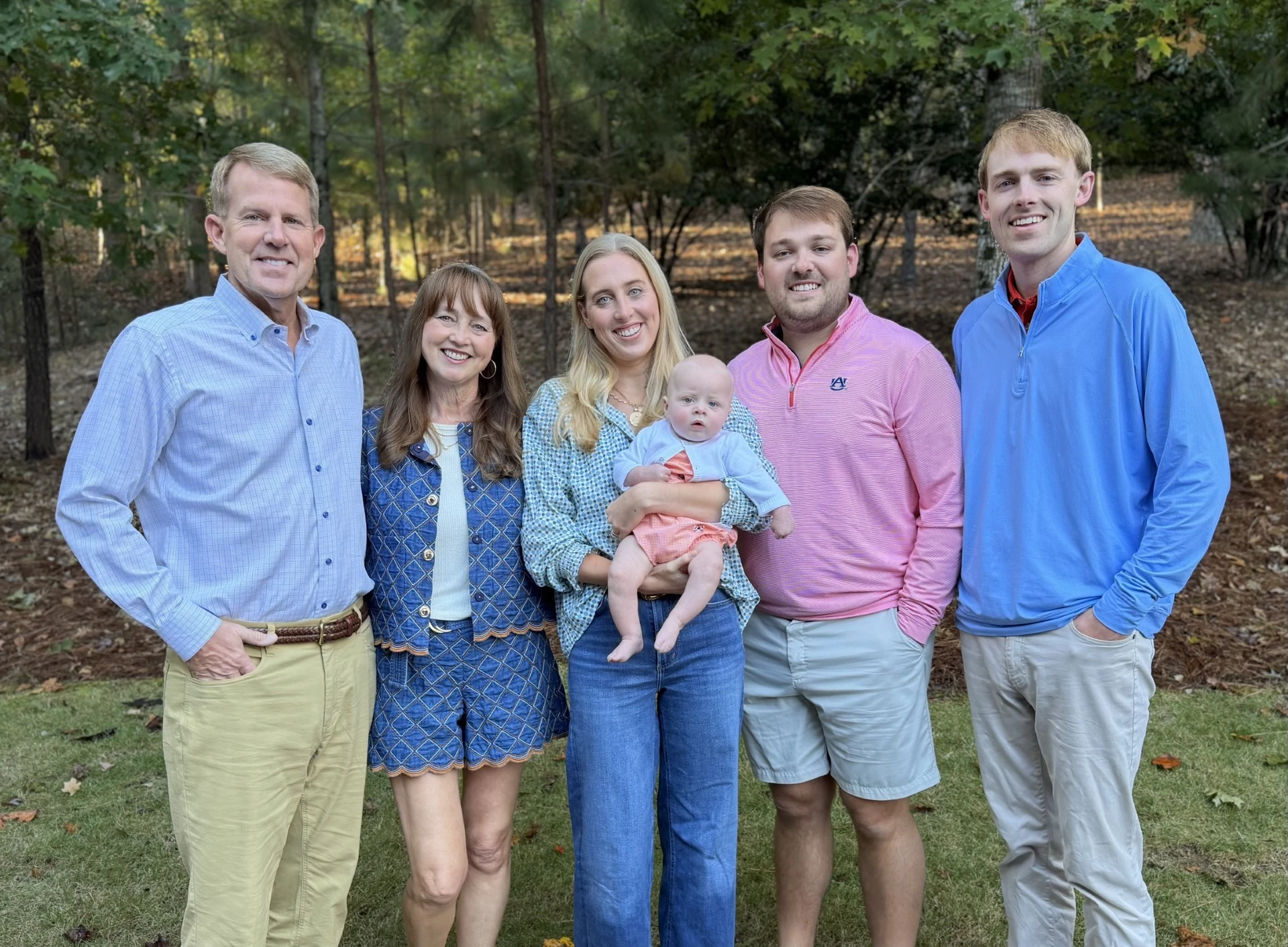
Not long after Price lost his dad, he and Meg began planning how they’d prepare their kids, teaching them about generosity and taking them to events to learn from other families and people their own age who were doing the same.
“One of the most intentional things we’ve done is modeled after what my parents did,” Price says. They began having regular family meetings. But they were going to take it slow.
“We adopted a marathon pace,” he says. One family meeting per year with mile markers. They committed to “lock arms as one unit” and enjoy every step. They’d start with long-range planning. By mile marker 10, the kids would be making decisions with their parents. At mile marker 15, some assets would transfer into the kids’ names, and by mile marker 20, the kids would be making most of the decisions. At the end of the marathon, the kids would be making the decisions on their own.
“But it’s going to happen in slow motion – a slow-motion succession plan,” Price says.
One family meeting happened at a hotel with a catered meal. One of Price’s mentors came and talked to the family about how having these types of meetings had helped his family. Another meeting was more casual – outdoors by a fire pit in the backyard, Price with his dog in his lap.
Though it takes a lot of work to prepare for these meetings, it’s worth it. Meg loves the transparency they’re able to share with their children.
Price thinks back on the time he thought his dad was using family meetings to brag, being selfish. “But what you’re actually doing is unselfish, because you’re giving power away,” he says. “Selfish is when, instead of having a family meeting, you go play golf.”
Their family meetings are fun. But, Price says, “that’s in contrast to when they’re in the lawyer’s office and I’m not there. If you’re not prepared, that’s a nightmare.”
So, they’ve planned for this too. Everyone in the family has a copy of their rapid succession plan. The kids can access it from their phones. Meg has a binder. Even Price’s mentors know what to do if something were to happen to him unexpectedly. “If Price doesn’t show up today, tomorrow, we open the binder,” Meg says. It’s a comfort and removes a very real burden.
Meg and Price’s parents prepared them for this intentional life they now live and for decisions they couldn’t ever have imagined having to make. Now Price and Meg are doing the same for their children, preparing them not just to inherit resources, but to steward them wisely and generously, to have fun together as a family ... and to always be prepared.
Week of November 28, 2026