The giving circle that outgrew its name
Giving circles are on the rise across the country, helping people pool resources, discover new needs, and connect more deeply with their communities. For a group of Atlanta women, it began with an idea that wouldn’t go away.
Anne Irwin describes herself as the kind of person who comes up with 100 ideas a day. But 20 years ago, one was different. Stories about women’s giving circles began jumping out at her from magazines. She read about women pooling money for greater impact on humanitarian issues, environmental causes, and other problems, and Anne began dreaming of what God could do with a giving circle focused on Christian ministries.
At first, she dismissed the thought. Organizing a giving circle wasn’t her strength, and she wasn’t looking for another project. But the idea kept coming back. In moments like that, Anne prays:
“God, please show me if this is from you, and if it’s not from you, help me to forget it.”
She didn’t forget it.
An idea that wouldn’t go away
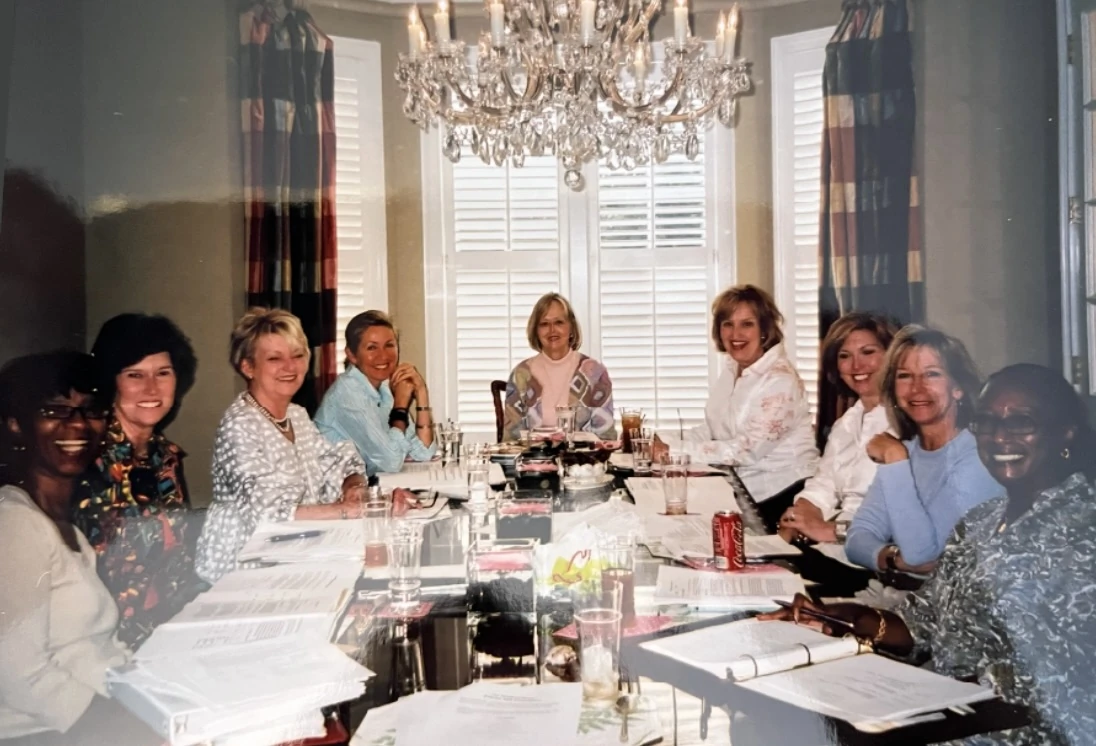
One Hundred Shares original board members in 2006
Anne told her friend Jan Linder about the idea. Jan was good at what Anne wasn’t – organization, writing bylaws, and implementation. Jan loved it and immediately called Minnie Buffington and Karen Loritts, women she knew through nonprofit fundraising.
Soon, a dozen women gathered around a table at a coffee shop. Several of them had spent years raising money for ministry. They believed deeply in the work, but they also knew how much effort traditional fundraising required.
What if this could be different – less focused on fundraising and more on the Holy Spirit, the causes God put on their hearts, building community, and serving their city?
That day, One Hundred Sharesopens in a new tab was born with a straightforward idea: Find 100 women who would each commit $1,000 a year for five years. Pool the money, learn about Christian ministries serving Atlanta, and make grants large enough to help them take a significant step forward.
When 100 became too small
In the beginning, 100 women felt ambitious. How would they find that many women and earn their trust? The founders prayed, established granting criteria, and began reaching out to women they knew.
Within three months, 100 women had committed. And more wanted to join. Anne remembers telling her husband 15 women were waiting for an opening. He pointed out the obvious: That was $15,000 waiting to be given away.
Minnie was thinking the same thing.
“It doesn’t matter how many women join,” she said. “The more money that comes in, the more we can give.”
So, they abandoned the 100-women cap. By year’s end, they had enough for two $50,000 grants.
That first grant cycle raised another question: How could they receive charitable gifts and send grants? Before One Hundred Shares became a nonprofit, an NCF Giving Fund provided a practical way to do it.
“We’re so thankful NCF was available to us,” Karen says.
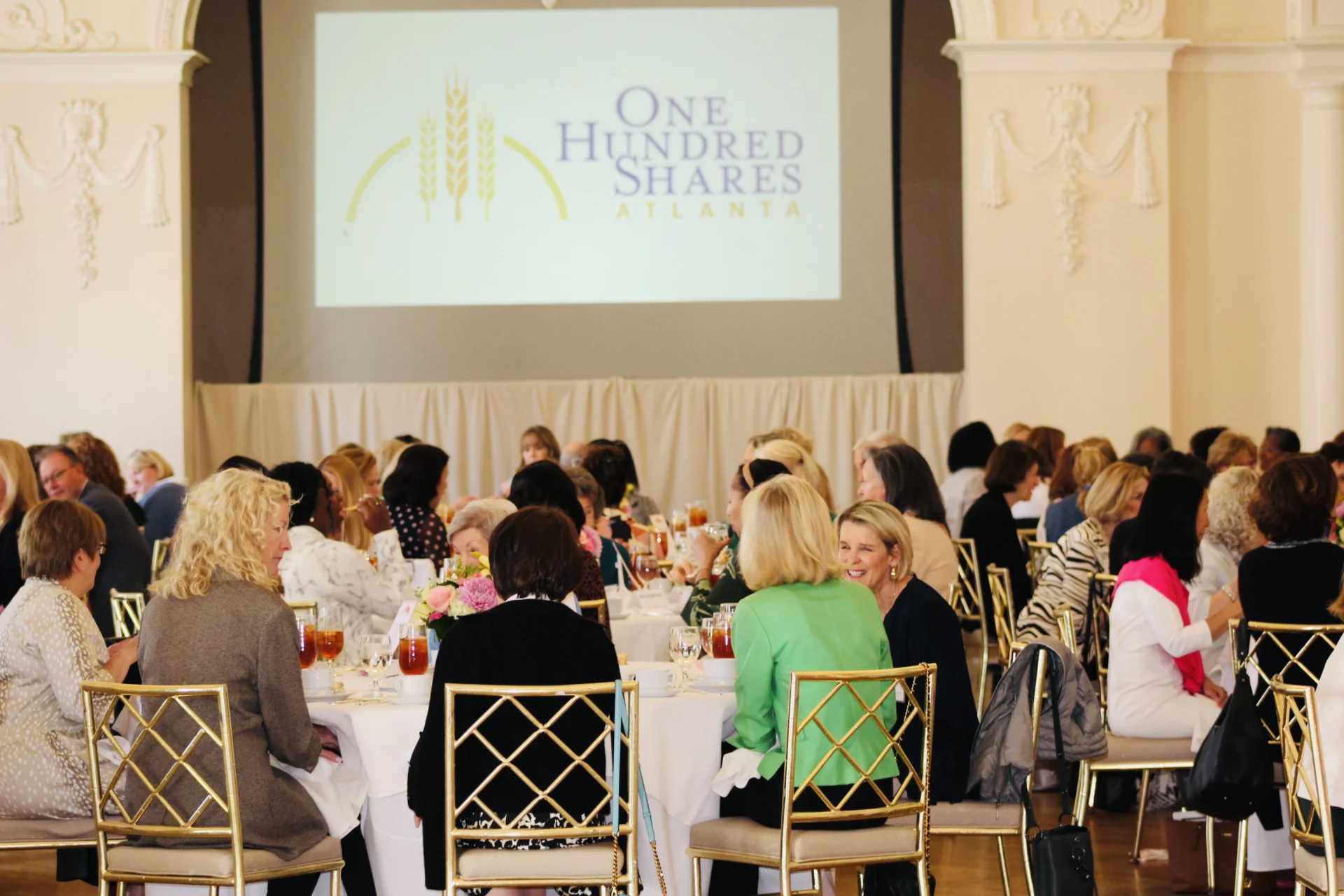
Even after becoming a nonprofit, One Hundred Shares kept its Giving Fund to facilitate giving. Today, more than 220 women participate in One Hundred Shares Atlanta. Together, they’ve directed $3.86 million to 47 Christ-centered nonprofits serving their city. And across the country, cities like Dallas, Nashville, and Wichita have created their own One Hundred Shares groups.
Giving that changes the giver
One Hundred Shares was always about more than pooling money for greater impact in Atlanta. It’s also about what happens to the givers.
“When you get involved beyond just your own giving, it broadens your perspective,” Karen says. “Like seeing what God’s doing in technicolor. In some ways, it does as much for you as it does for the recipient.”
A 2024 national study of collective givingopens in a new tab found that after joining a giving circle, members report giving more, volunteering more, learning more about their communities, and building stronger relationships within them.
One Hundred Shares has seen it happen in Atlanta.
Each year, local Christian ministries apply for a One Hundred Shares grant. The board selects a few finalists, then invites the women to hear from ministry leaders, join site visits, and offer feedback before final decisions.
Sometimes the relationship continues after the site visit. Anne has seen women return to volunteer, give more, or introduce ministries to their churches, friends, or family foundations.
“Giving in your own community creates a different sense of responsibility,” Karen says. “It draws us beyond our own four walls and into needs we can see and respond to close to home.”
The following spring, recipients return to show what the grants made possible.
“It’s very rare to be able to get your hands and feet on the ground and see what they’re doing with the money you’ve given,” says Anne. But for One Hundred Shares, that’s just part of the process.
What shared generosity makes possible
One Hundred Shares has also seen collaborative giving create impact beyond the projects it funds. One year, they helped PAWKidsopens in a new tab buy a van. The Atlanta ministry uses it to take children to after-school programs and older neighbors to medical appointments and the grocery store.
That year, One Hundred Shares also funded a new cabin at Camp Graceopens in a new tab, a Christ-centered summer camp that hosts underserved children from across Atlanta.
Then something happened neither ministry had anticipated. Through One Hundred Shares, PAWKids learned about Camp Grace. Now it had both a van and a place to take children for summer camp. The grants met separate needs, but the connection between ministries let both reach further.
Following the pillar cloud
Through the years, the founders have been intentional about what One Hundred Shares is and what it isn’t.
The ministries it funds must be Christ centered, serve the Atlanta area, and make the gospel part of their work, believing practical help and spiritual healing belong together.
“We don’t want to just give a cup of cold water without giving the gospel,” Karen says.
Prayer also guides the granting process. Recipients aren’t selected based on personal preferences but through considerable time spent in prayer, both as a board and individually. Anne compares their approach to God’s people following the pillar of cloud through the wilderness. They want to move where God leads rather than pursue projects without his direction.
“When we face a closed door, we wait to see whether God opens it,” Anne says. “We don’t bang our way through. If the pillar cloud stops, we’re going to stop.”
That posture has kept the work surprisingly easy. The process stays simple. Women can attend two events each year, join site visits, volunteer, and become deeply involved – or just make their annual gift and pray. The organization allows for either level of involvement.
An idea of your own
Giving circles can bring together women, men, couples, neighbors, coworkers, or people united by a cause. If you’re drawn to this kind of generosity, the first step doesn’t have to be complicated. It might mean joining a giving circle already at work in your community or gathering a few people you trust to pray, learn, and give together.
“It all starts with trusting God and having enough courage to share the vision,” Karen says. “We don’t always know what we’re doing, but we trust that God will show us the way.”
Anne didn’t know how to build a giving circle. She told Jan, who brought in others. Each carried a different part of what was needed. Together, they discovered how much more impact generosity could have when shared.
 Mercy
 4 high-impact ways your church can serve the poor
 CEO to CEO: The never-before opportunity
 Financial freedom: A tale of 2 women