To educate a girl

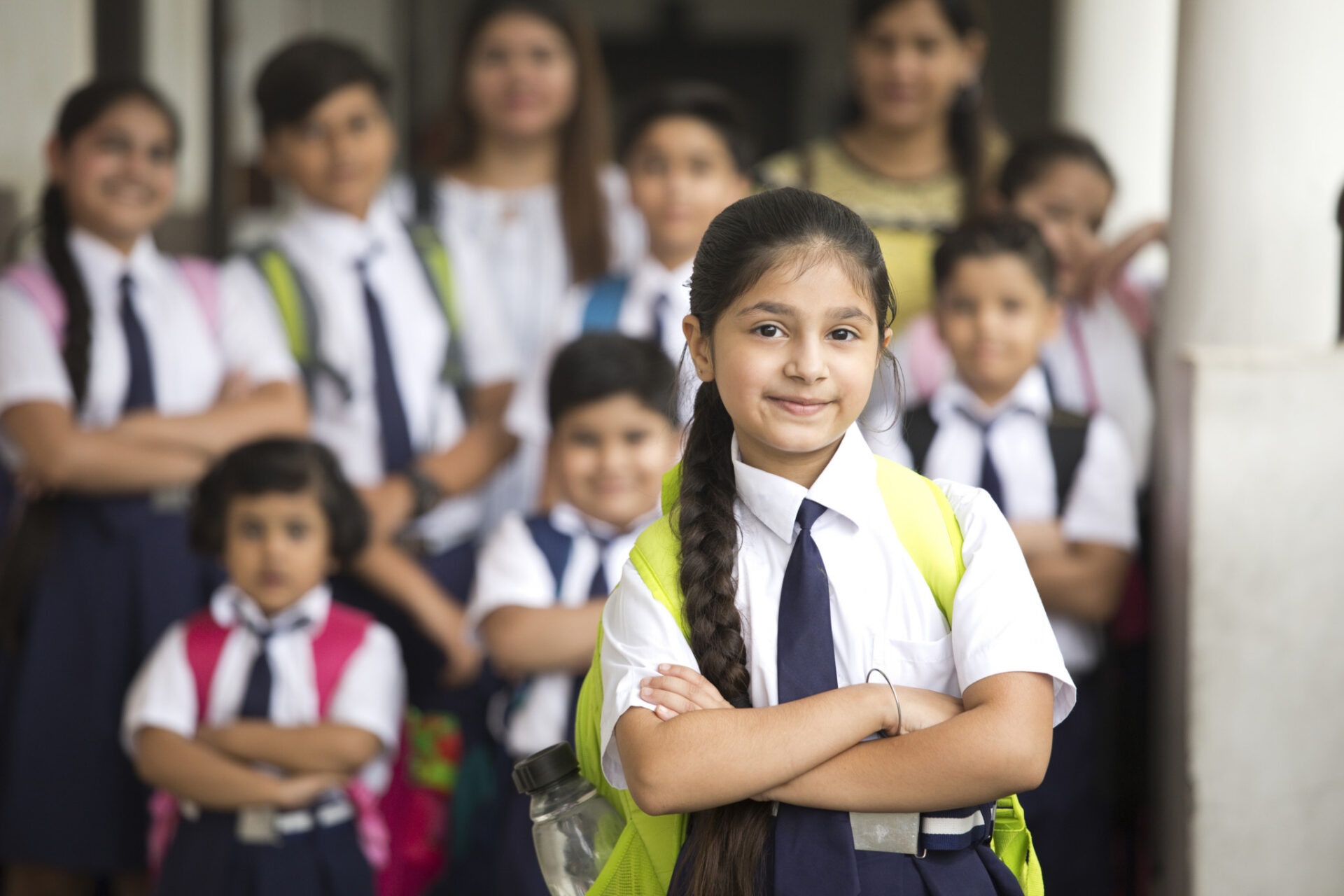
What happens when you educate a girl? It’s a question organizations worldwide are asking as they work to expand access to education for girls and women across the globe. While charities in the field may employ different approaches to a solution, there’s one thing they all agree on: Educating a girl doesn’t just change her future. It transforms her family, her community, and her faith.
Why should we care about educating girls?
Statistics show that 122 million girlsopens in a new tab are out of school around the world, and only 49 percentopens in a new tab of countries have achieved gender parity when it comes to education. In countries impacted by conflict, girls are twice as likely to be out of school as girls living in areas where there is no conflict.
In those places specifically, the barriers keeping girls and women from education are far more complex than just a lack of time, resources, and support to keep girls in school. It’s what Edgar Sandoval, President and CEO of World Visionopens in a new tab, calls the “multidimensional nature of the issue.”
“In impoverished communities, girls spend a disproportionate amount of time helping with household chores,” Edgar says. “Things like caring for their siblings, cooking, cleaning, and gathering water all fall on their shoulders. So, girls are the first ones to be taken out of school when their families either can’t afford to send them or they need them at home to carry the weight of the household.”
Before he began a career dedicated to serving those in impoverished communities around the world, Edgar was a boy from Latin America whose family immigrated to the United States for a better life.
“My mom was a strong supporter of education,” Edgar recalls. “She would always say, ‘You and your brother are going to college, and, no matter what, your sister is going to college, too.’”
Today, he understands the reason his mother made this distinction so clear.
“My mom wanted us to know there should be no question that our sister – a girl – would get to go to school, too,” Edgar says. “She knew then what we didn’t: Equal access to education for girls wasn’t always the expectation.”
And with threats like child marriage, sexual exploitation, and slavery, the threats to girls completing their education today can seem almost insurmountable. (Not to mention that girls being out of school increases their risk of these.opens in a new tab)
“It’s the Goliath of our age,” says Michele Rickett, Founder and CEO of She Is Safeopens in a new tab, a faith-based nonprofit working to rescue and restore women and girls from abuse and sex trafficking in the least-reached places around the world. Michele first recognized the size of the problem and the lack of safety young girls were experiencing when she witnessed it firsthand as a missionary in Africa.
“I saw the way the culture impacted girls specifically,” Michele says. “There was this underlying thought that girls were expendable, that if someone was going to be underfed, sold, exploited, or held back from education, it was going to be a girl.”
In an effort to pick up a stone and take on that Goliath herself, Michele started She Is Safe in 2002.
“My theory was that if Christians understood the reality of what was happening to girls around the world, they would want to do something about it,” Michele says. “Because in the same way God cares about every part of our lives, he cares about every part of the lives of these priceless girls, too.”
“There was this underlying thought that girls were expendable. That if someone was going to be underfed, sold, exploited, or, of course, held back from education, it was going to be a girl.”
Michele Rickett
A spiritual issue
At its root, those working to combat the problem agree this isn’t just an issue of poverty, exploitation, or lack of access (though it’s those things, too). It’s an issue with deep spiritual roots as well.
“Just like the issue of education is multidimensional, the poverty that leads up to it is multidimensional as well,” says Jeremy Rodgers, Senior Director of Edification and Philanthropy at Edifyopens in a new tab. “It’s shelter, food, water, education, and a true, spiritual poverty as well.”
Edify partners with Christ-centered schools in Africa and Latin America, where they hope to improve the quality of education and expand opportunities for education for boys and girls alike. They’re working to stop the cycle of poverty from a place not just of culture reform or access to education but from a spiritual foundation, too.
“It’s not just that we want more girls in more schools,” Jeremy says. “It’s that, ultimately, we want to see them flourish the way God intended.”
But in countries where girls and women have little to no access to education, a lack of flourishing results. The effects come in both short-term consequences and long-term, generational impact.
Edgar says you can see effects even in the short term. “You can see the loss of optimism and the desire to dream in these girls,” Edgar says. “Something happens to the soul when you’re unable to keep growing, dreaming, and aspiring to something. The impact on their sense of self-esteem and dignity is great.”
Over time, that same lack of education impacts not just the girl, but her family as well.
“That lack of education shapes the rest of her life,” Edgar continues. “She’ll have a low probability of finding stable, dignified work. She’ll struggle with a steady income, which will leave her with fewer safe options to provide for her family. And that reverberates for generations.”
It’s an experience Edgar has seen many times.
“Education reinforces the God-given dignity of a child,” Edgar says. “When girls are empowered to finish their education, we see them grow up with a strong sense of safety, self-worth, and identity. And when they’re not, we see that chip away at the sense of hope, optimism, and dignity for generations to come.”
Working toward a solution
With a problem so big, how do we begin to solve it? According to the leaders we spoke with, the answer isn’t in a narrow approach. Rather, it’s a holistic, long-term commitment to removing the barriers that stand in the way of education for girls – a much bigger task.
“There isn’t a single solution that will provide the right to education for all girls around the world,” Edgar says. “It’s a multitude of issues and barriers we’re dealing with, and that’s why taking a holistic approach to address the root causes and do what we can to help release the pressure those causes create is the starting point. If those issues can be addressed, then families won’t feel forced to hold their daughters back.”
Child sponsorship is one solution for World Vision, specifically an annual campaign that seeks to get 1,000 girls sponsored by the United Nations’ International Day of the Girl on October 11 every year.
“Something happens to the soul when you’re unable to keep growing, dreaming, and aspiring to something. The impact on their sense of self-esteem and dignity is great.”
Edgar Sandoval
Child protective efforts within impoverished communities are also critical. These efforts include an intentional focus on ending child marriage. Around the world, 12 million girlsopens in a new tab are married before adulthood. That’s 22 girls under the age of 18 every minute. It’s a statistic World Vision is determined to eradicate through their work supporting girls and women’s rights around the world. Through an initiative called the Big Dream to End Child Marriageopens in a new tab, the prayer is that 660,000 individuals – including 170,000 girls – will be uplifted by 2030.
“When girls are forced into child marriage, their path toward education stops there,” Edgar says. “But if we can work to break down that barrier and the others that surround it, we believe we can see girls set free in all kinds of ways, education being one of them.”
 Faithful investing: A theology of stewardship and impact
 Beyond cash: Giving LLC and partnership interests
 God’s first gift wasn’t money
 Turn stock into greater generosity