In some of the most remote areas of the world, the gospel is being carried on foot, from village to village, spreading through places it’s never been heard, often accompanied by reports that echo the book of Acts. Newly planted churches are quickly multiplying as new believers become disciple makers. And you’re invited to be a part of it.
Esther is 26 and illiterate. Over the past few months, she’s memorized 60 stories from Scripture, walked through the tiger-infested jungles of South Asia, and arrived at a village that had never had a church before she reached it. She taught the women of the village about women’s health issues and about the God who made them in his image. She prayed over two boys with physical disabilities, who got up and started walking for the first time in their lives. By the time Esther left, she’d baptized everyone in the village.
In Nepal, a church-planting couple got stuck outside a local witch doctor’s house when their bicycle chain broke. After their chain was fixed, they returned the next day to share Jesus with the family. In the years since, that former witch doctor, now an evangelist, has planted churches that bring the Good News of Jesus to hundreds of families across the region – and the downstream effects have been miraculous.
These villagers were taught the God-given value of every human life. Many sick and physically disabled people were healed. A drug rehabilitation program opened. Sex trafficking, once widespread, is nearly gone. The percentage of children attending school grew from about 50 to 98 percent, because of the newfound hope of the gospel.
What sounds extraordinary is becoming increasingly common in places where the gospel is reaching communities for the first time. In these contexts, church planting starts with a single believer sharing the gospel with friends and neighbors, forming a simple community of faith, and helping others do the same.
These churches are intentionally small, locally led, and deeply connected to their communities. Instead of growing primarily through addition, they multiply as new believers quickly become disciple makers and new churches form in neighboring villages.
Unprecedented growth
Because of our work at NCF, we have the privilege of being connected to world leaders in the field of church planting, experts starting new bodies of Christ in the most unreached places. We spoke with four of those leaders who all agreed on one thing: Christianity is in a unique era of accelerated growth.
The number of people in the world who identify as Christian has grown from 500 million in 1900 to 2.6 billion in 2026. And by 2075, it’s projected there will be a billion more believers. We are living in one of the most exciting times in the history of the Church.

Ryan Skoog, Founder of Venture, a ministry that plants churches in the hardest-to-reach regions, hears stories like Esther’s and the witch doctor’s all the time. “This isn’t just the most explosive growth of the Church in our lifetime,” Skoog says. “It’s the most explosive growth of the Church in the history of the Church.”
That growth often happens under the most unlikely conditions. In Nepal, one movement started 26,000 house churches in six years. In a region of northern India, one network has grown to more than 110,000 house churches. In China, one pastor abandoned the four walls of his church building, shrank his own 200-person congregation down to 50, and equipped each of them to start a group of their own. Now, more than 1.4 million people have come to faith through that lineage of multiplication.
Yet for all this growth, the need remains vast. Today, millions of communities around the world still have no local church, no consistent gospel witness within walking distance, and no personal connection to a follower of Jesus.
The least-funded cause
This explosive growth is happening alongside two major challenges facing the church-planting movement. You may see varying numbers across studies due to researchers measuring different ways, but they all arrive at the same conclusion: There are drastically too few resources reaching the unreached.
The first challenge is geographical. Of the roughly eight billion people alive today, an estimated 3.58 billion (about 43 percent) live in unreached people groups – populations that are less than two percent Christian and lack the resources to evangelize that group.
The most concentrated stretch of these communities runs across what missiologists call the 10/40 window – the band of latitude from North Africa across the Middle East and into South and East Asia. JJ Alderman, Executive Director of the Achieve Alliance and Coalition of the Willing – two collectives focused on ensuring there is a church in every village on earth – has been mapping these places for years.
In Togo, local teams have walked from village to village across the country and added nearly 10,000 communities that the Togolese government had not previously mapped. They identified 5,600 villages without a church and set a target: a church in every one of them by December 25, 2027. Local leaders in Benin are preparing to do the same. The broader goal is full mapping of every village on earth – and a thriving, sustainable church in each of them – by 2050.
Alderman estimates there are at least 10 million places in the world where people gather in some kind of community – a village, a tribe, a neighborhood – and roughly half of them have no local church.
“They were never told to go to church,” Alderman says. “We were told to go to them.”
The second challenge is engagement. Despite nearly half of the world’s population being unreached, 97 percent of missionaries go to already-reached places. For every $100 Christians give, $99 stays in the home country, $1 goes to global missions, and $0.02 of that dollar goes towards reaching the unreached. Yet, much like the early church, the story of Jesus is spreading – through word-of-mouth, miracles, and in tangible ways, whole communities are receiving the hope of the gospel.
Humble collaboration and divine multiplication
Dr. Bekele Shanko grew up in Ethiopia under the Communist regime that took power in 1974. Churches were closed. Christians were arrested. Believers were forbidden to own Bibles, to pray together, or to share their faith. So, the Ethiopian Church went underground. Literally.
“You would go into a house, lift a brick in the floor, and go down to where 50 to 100 people were praying the whole night and crying out to God,” Dr. Shanko says.
At that time, there were fewer than 200,000 believers in the country. When the regime collapsed 17 years later and the Church came above ground again, more than 8 million Ethiopian Christians celebrated. Christianity had grown fortyfold while the state was trying to kill it.
“That is the power of prayer and desperate dependance on God,” Dr. Shanko says.
Today, Dr. Shanko serves as the Global Vice President of Cru and Founder of GACX, a global alliance for church multiplication. What began with a handful of organizations has grown into a network of 130+ ministries working together toward the same goal: a healthy, multiplying, sustainable church within walking distance of every person on earth.
“We aren’t the only ones doing God’s work,” Dr. Shanko says. “God has many servants, many organizations, many churches. When we come together with humility and a shared purpose, we see what only he can do.”
A simple pattern
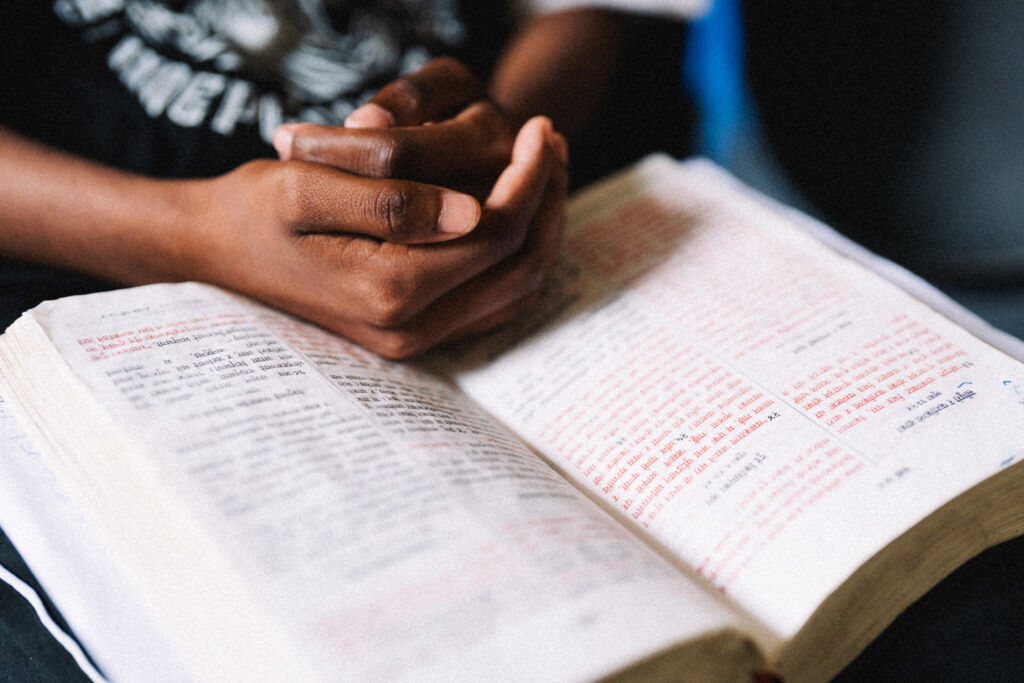
A house church in Nepal or China or India is deliberately simple and reproducible. A small group of believers gathers regularly, reads a passage of Scripture, and memorizes it together. (Much of the global Church operates in oral cultures where literacy is low.) They ask three questions of every passage:
- What does this say about God?
- What does this say about people?
- How can we obey it?
When the fellowship outgrows one small room, the leaders identify two or three people who can lead, equip them in the same simple practices, and send them to start a new gathering. The pattern repeats.
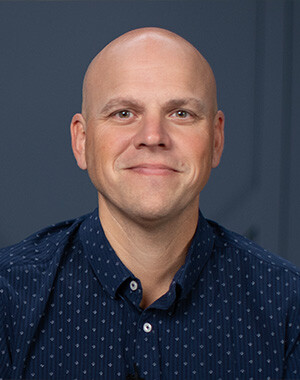
Scott Cheatham, CEO of e3 Partners, works in 105 countries with this paradigm. He calls it the outsider-insider model. “There’s never been a movement of God in the world that has started by insider only,” Cheatham says. “There’s always an outside catalyst that drops in, inspires people, and equips them to be obedient to God. Then they begin to see exponential multiplication.”
The local leaders trained by e3 are organized in what he calls a 1-3-9 model: One person pours into three. Each of those three pours into three others. Those nine pour into the next layer of three. Each layer is called a “generation” in church-planting terms. By the fourth generation, you’re looking at the kind of multiplication that closes the gap between the size of the unreached world and the speed at which the Church can reach it.
In one region of Tanzania, Dr. Shanko has seen 32 generations of churches – each new group planting another, again and again, until a single starting point multiplies across an entire region. In 2025, e3 planted thousands of churches and invested directly in about 55,000 indigenous leaders worldwide. Now, because of an outside catalyst, thousands of new believers are equipped to exponentially spread the good news of the gospel.
How you can be an outside catalyst
In order to reach the goal laid out by the Great Commission, it’s going to take extraordinary collaboration.
“We have everything we need right now to get the gospel to every person on the planet,” Cheatham says. “The question is, ‘Are we going to get our stuff together to do it?’”
Skoog calls the framework most of these organizations use to fuel the movement “TNT”: tools, networking, and training. Jesus Film equipment. Audio Bibles. Motorcycles to reach the last mile. Travel funds so church planters across regions can gather and sharpen one another. Training that helps an illiterate believer like Esther memorize 60 stories from Scripture and teach them across villages.
Skoog and Cheatham caution, however, that even well-intentioned generosity, applied in the wrong ways, can do real damage. They note that in many unreached regions, rapidly multiplying church movements often function differently than traditional Western ministry structures. In those settings, outside funding for permanent buildings or long-term salaried ministry roles can sometimes hinder the local, reproducible models at work.
The most effective giving strengthens what’s already happening on the ground. That often means supporting training, collaboration, and resourcing cooperative networks rather than individual projects.
“Money can kill a movement, but the right investment greatly accelerates a movement,” Skoog says. A local church planter once told him, “Brother, in my country, if you give a man a building and a congregation, he thinks he’s a king. Then, instead of growing, he fights other pastors.”
This is why many of these projects are intentionally structured to remain simple – locally led, minimally funded, and deeply embedded in the community. The goal is not to copy a western model of church with a building and lead pastor but to see the gospel take root in ways that can grow and multiply naturally within each culture.
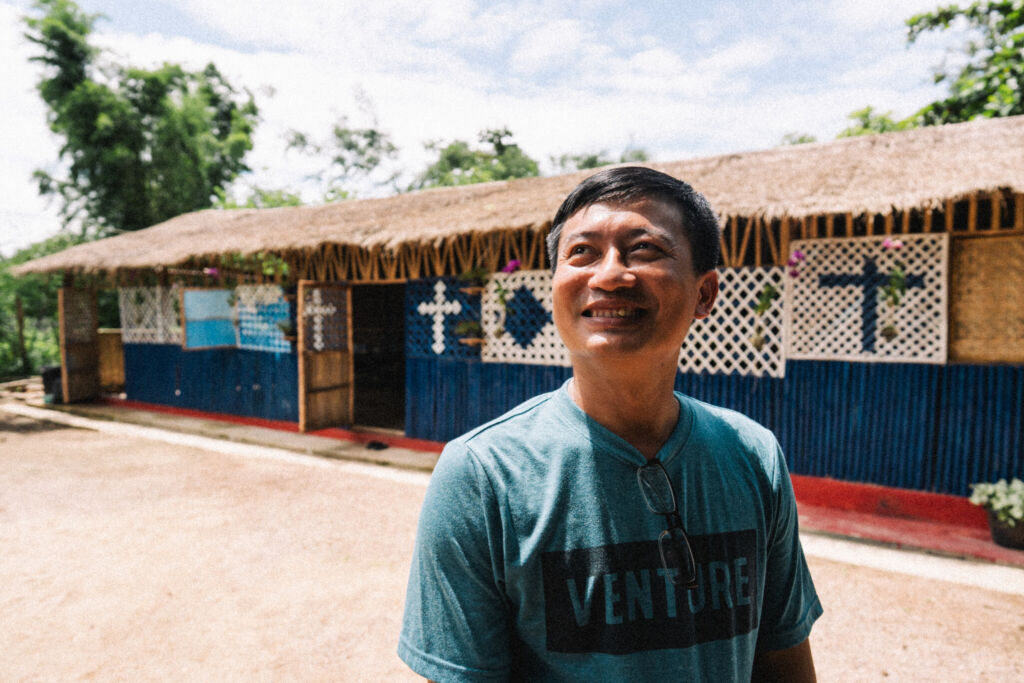
“I can’t guarantee that I’m going to be rich in this world,” Alderman says. “I don’t know what my wealth will look like when I’m done with this life, but I can guarantee you one thing: I’m not going to get to heaven and be poor, because I’m taking as many people as I can with me.”
Somewhere in the world today, there’s a community where no one knows a follower of Jesus. There’s no one to ask, no one to learn from, no one to show what a life of faith looks like. And somewhere else, a new believer is taking a step of faith, sharing what they’ve received, forming a small community of faith that may one day multiply into many.
This is how the Church has always grown: people sharing the gospel, forming communities, and carrying Jesus’ message into new places. How will you help equip the movement carrying the Good News of Jesus from village to village today?
All photos courtesy of Venture
